APIs over core CICS or IMS transactions
Secured, documented APIs in front of a core transaction, such as a customer, policy or account lookup, so web, mobile, partner and AI channels can use it without touching the mainframe code. See API wrappers.
Mainframe migration
Your mainframe still runs the business. We move workloads off it, or open them up with secure APIs, in fixed-price sprints that keep the core running while each change is proven.
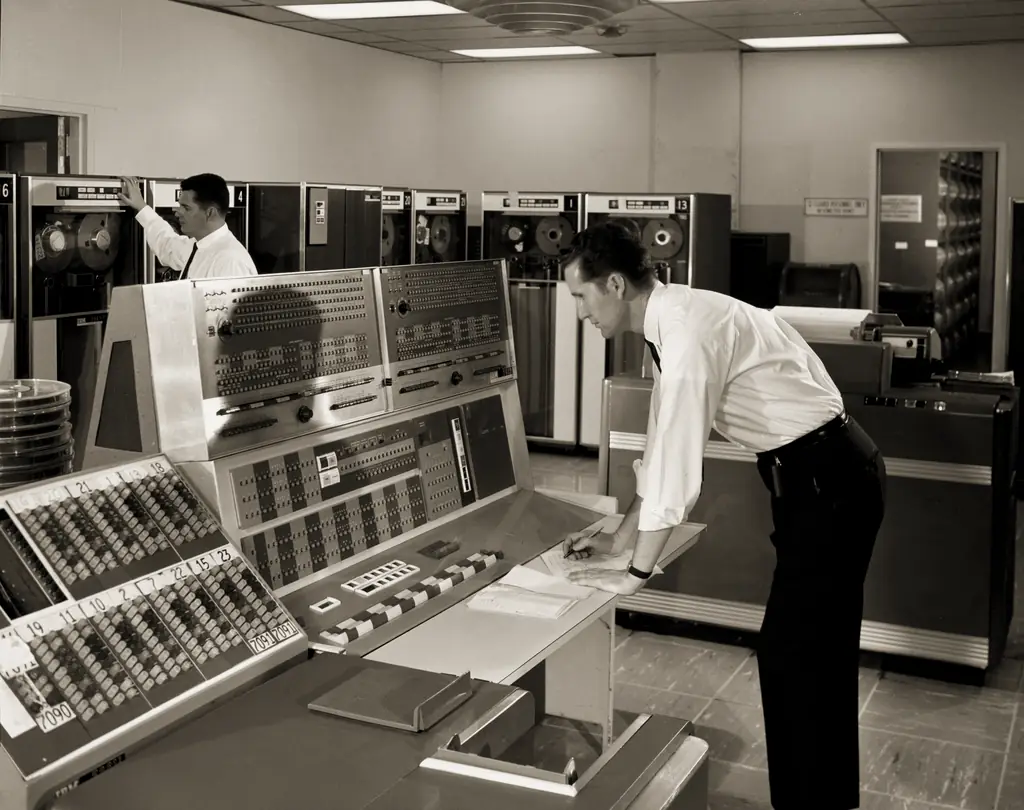
Mainframe modernisation is the process of moving applications and data from mainframe platforms, such as IBM Z running z/OS, to modern infrastructure, or of opening them up to new channels without moving them. Typical mainframe applications are written in COBOL or PL/I, run transactions under CICS or IMS, keep data in DB2, IMS or VSAM files, and run nightly batch controlled by JCL.
The main options are rehosting the code on modern infrastructure, converting it to Java or .NET, rebuilding functions as new services, and wrapping core transactions in APIs. The lower-risk approach is to move one workload at a time, starting with the ones that cost the most to run or block new products.
Mainframes are reliable. What hurts is everything around them.
Illustrative examples. Your first sprint is chosen in the Migration Blueprint for the fastest payback and lowest risk.
Secured, documented APIs in front of a core transaction, such as a customer, policy or account lookup, so web, mobile, partner and AI channels can use it without touching the mainframe code. See API wrappers.
A JCL batch stream rebuilt as scheduled jobs on modern infrastructure, with outputs reconciled against the mainframe on every parallel run.
DB2 and VSAM data replicated to a modern database, so reporting and analytics stop consuming mainframe capacity.
A defined group of programs moved to Java or C#, with tests proving the same outputs for the same inputs.
Programs, copybooks, datasets, jobs and their dependencies documented, ready to plan the exit or the next sprint.
COBOL and PL/I programs to Java, C# or rebuilt services
CICS and IMS transactions to REST APIs and event streams
JCL batch to Scheduled cloud or container jobs
DB2 for z/OS to PostgreSQL, Db2 LUW or a managed cloud database
VSAM and flat files to Relational tables with validated history
3270 green screens to Web interfaces with single sign-on
A five-day Migration Blueprint maps your mainframe estate and picks the first workload, from A$9,500 and credited in full if you go ahead within 60 days. Then one fixed-price 30-day sprint at a time.
from A$50,000 per sprint
No. Many organisations keep the mainframe for the core and move everything around it: reporting, batch, new channels and integrations. Others exit in stages. The Migration Blueprint compares both against your costs, skills and risk.
With your own data. Old and new run the same inputs in parallel, and outputs are compared record by record before anything switches over. Differences are explained and fixed, or signed off, before cutover.
Yes. We work alongside your provider and internal teams, agree access and change windows with them, and hand over everything we build.
That is common. The Blueprint maps programs, copybooks, datasets and jobs, and every sprint leaves behind documentation, so knowledge stops living in a few people's heads.